

Available 24/7Water extraction and drying
Water Extraction and Drying in Northern Virginia
We get the water out, then keep drying until the readings say dry.
- 4.9 on Google
- One crew, dry-out to rebuild
- Available 24/7Nights, weekends, holidays
- 42-year builderOwner Curtis Berg, journeyman
- Navy Seabees veteranThe Navy's construction force
- Adjuster-ready recordsPhotos, readings, estimate
Water extraction and water removal
We remove standing water from your home with extraction equipment, then dry the structure with dehumidifiers and air movers until moisture readings say it is dry. How fast the water comes out has a lot to do with how much of your home has to be torn out.
Call (703) 783-7855 any time. Water keeps moving into drywall, baseboards and subfloor until it is pulled out.
Why speed matters
Water does not sit still. It wicks up drywall from the floor, runs under baseboards, soaks into carpet pad and seeps between subfloor seams. Carpet that could have been dried in place gets worse the longer it sits. Wood swells and cups. Clean water turns dirty. And materials that stay wet long enough can start to grow mold.
How extraction and drying work
1. Extraction
We pump or vacuum standing water off the floor and pull water out of carpet and pad. In a flooded basement, that starts with pumping out the bulk of the water. The more water extraction removes, the less the drying equipment has to do.
2. Mapping the moisture
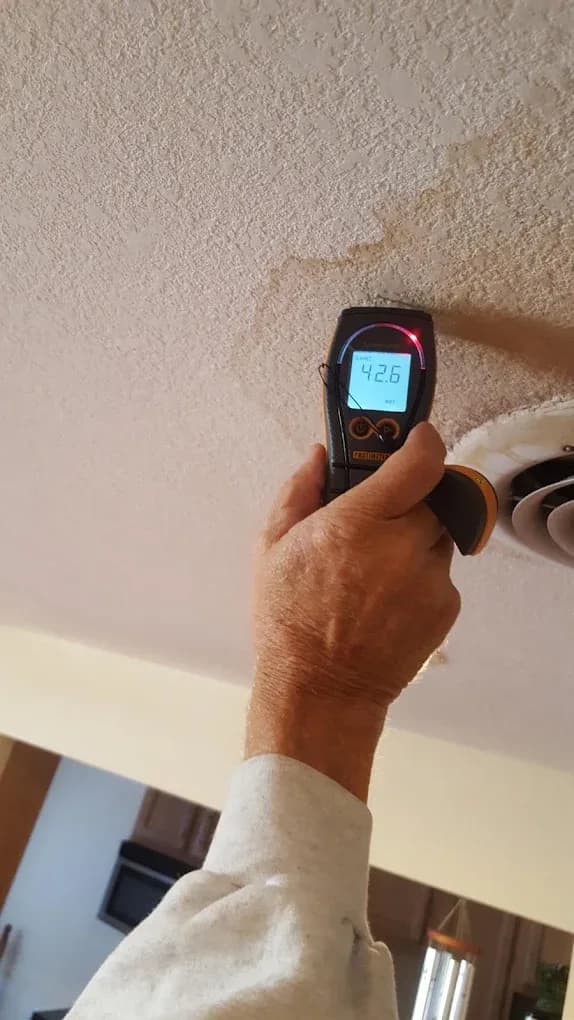
The water you see is not all the water there is. We take moisture readings in floors, walls, ceilings and trim around the wet area to find where it traveled. Those readings decide what can be dried in place and what has to come out.
3. Removing what cannot dry
Carpet pad, soaked insulation and drywall that wicked water up usually come out. Sometimes we cut a strip of drywall along the bottom of a wall or drill small holes behind baseboards so air can reach the wall cavity. We photograph everything before it is removed.
4. Structural drying
Dehumidifiers pull water out of the air. Air movers push dry air across wet surfaces so water evaporates out of the material. The equipment runs day and night. Closing off the room and keeping windows shut usually helps the dehumidifiers work.
5. Monitoring until dry
We come back to take readings, log them and adjust equipment as areas dry. Drying is done when the readings say so, not after a set number of days. Every reading goes into the documentation we send to your insurer.
What you can expect while equipment runs
- Steady fan noise and warm air in the drying area.
- Visits to take readings and move equipment as areas dry.
- Some rooms or floors off limits for a while.
- A little more on your electric bill while equipment runs.
If something smells musty during or after drying, tell us. We can check for mold, and if needed, do mold inspection and testing.
Dry is only half the job
Many water removal companies leave once the house is dry. You get a room with holes in the walls and no flooring. We keep going: the same crew rebuilds what had to come out. Owner Curtis Berg is a Navy Seabees veteran with 42 years as a journeyman builder, so the dry-out is planned with the rebuild in mind. We work for you, and we document everything your adjuster needs.
Our process
From standing water to a finished room
Four steps, one crew, one phone number.
- Step 1
Stop the water and pull it out
We find where the water is coming from, stop it, and extract standing water from floors, carpet and the structure.
- Step 2
Dry it out
We set dehumidifiers and air movers and take moisture readings each visit. The equipment stays until the readings say dry.
- Step 3
Document it for your adjuster
We photograph the damage, log every moisture reading, and write the estimate. We send that documentation to your insurer and meet your adjuster on site.
- Step 4
Build it back
The same crew replaces drywall, insulation, flooring, trim and paint. No handoff to a second contractor.
Insurance documentation
We work for you, not your insurance company
You hire us and we bill you. Then we give your insurer the paperwork they ask for, so you are not chasing photos and receipts while your house is torn open.
Your insurance company decides what your policy covers. We are a restoration contractor, not a public adjuster.
What your adjuster gets
Sent to your insurer, in writing
- Photos of the damage before, during and after
- Moisture readings logged on every visit
- A written estimate for the dry-out and the rebuild
- Documentation sent to your insurer
- We meet your adjuster at your home
FAQ
Water extraction and drying questions
Not answered here? Call (703) 783-7855, any time.
What is the difference between water extraction and drying?
Extraction removes the liquid water: standing water on floors and water held in carpet and pad. Drying removes the moisture left inside drywall, framing, subfloor and concrete, which takes dehumidifiers, air movers and time.
How long does structural drying take?
It depends on the materials and how long the water sat. Drywall dries faster than hardwood floors, subfloor under tile or a concrete slab. We take moisture readings on every visit and remove equipment only when the readings say dry.
Why is the equipment so loud, and can I turn it off at night?
Air movers and dehumidifiers run around the clock because drying stops when they stop. Please leave them on unless we tell you otherwise. If the noise is a problem in a bedroom, call us and we can talk through the setup.
Will drying raise my electric bill?
Yes, some. Drying equipment draws power while it runs. Keep track of the dates the equipment was in your home in case your insurer asks.
Can hardwood floors be saved after water damage?
Sometimes. If we get to them early, wet hardwood can often be dried in place, though some boards may cup or need refinishing. Boards that stay wet too long or swell badly usually have to be replaced, which our rebuild crew handles.
Do you rebuild after drying?
Yes. Once readings say dry, the same crew rebuilds what had to come out, in-house. No second contractor.
Our work
Real jobs, start to finish
Photos from our own jobs: finding the water, opening up what got wet, and drying it out.
- Moisture readings
A moisture meter held against a water-stained ceiling, reading 42.6  Our equipment
Air movers and dehumidifiers racked and strapped inside a work van  Tear-out
Three crew members in dust masks pulling wet insulation, drywall and wiring out of a basement room  Mold removal
A technician in a protective suit and respirator vacuuming a concrete block wall under ductwork 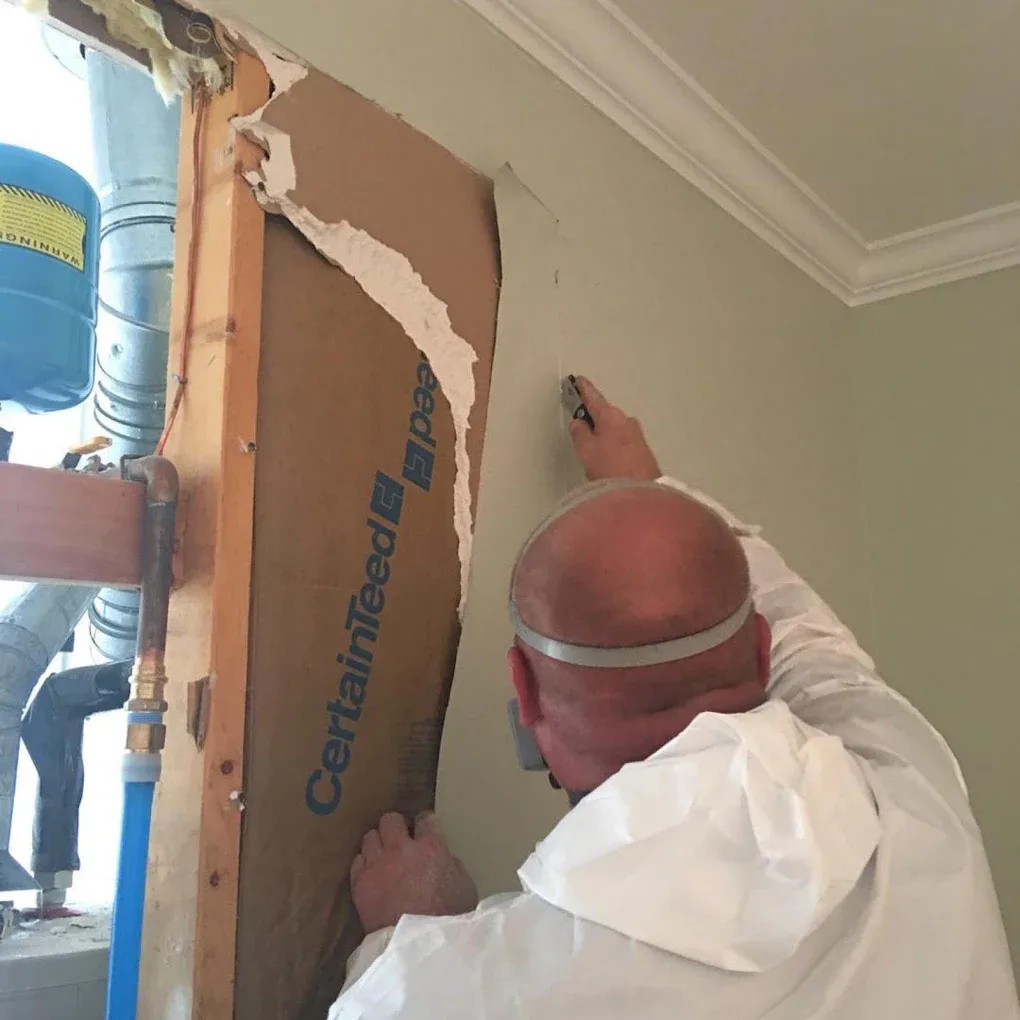 Tear-out
A technician in a protective suit cutting away drywall next to exposed pipes and a pressure tank  Inspection
A technician with a flashlight checking an opened section of ceiling above a doorway
Near you
Water removal near you
- Water damage restoration in Fairfax
- Water damage restoration in Leesburg
- Water damage restoration in Sterling
- Water damage restoration in Ashburn
Services
Other services
- Water damage restorationLeaks, overflows and flooding cleaned up and dried out.Learn more
- Burst and frozen pipesWater from a split or frozen pipe, from shutoff to rebuild.Learn more
- Flooded basementsPump-out, drying and rebuilding finished basements.Learn more
- Sewage backup cleanupSafe removal and sanitizing after a sewer or toilet backup.Learn more
- Rebuild and repairDrywall, floors, trim and paint, done by the same crew.Learn more
- Mold remediationMold removed and the wet area dried out.Learn more
- Mold inspection and testingFind out if you have mold and how far it goes.Learn more
Available 24/7
Standing water? Call now.
The sooner the water comes out, the less has to be torn out. One crew dries it out and builds it back.