

Available 24/7Mold inspection and testing
Mold Inspection and Testing in Northern Virginia
Find out what you have, where it is coming from, and what it takes to fix.
- 4.9 on Google
- One crew, dry-out to rebuild
- Available 24/7Nights, weekends, holidays
- 42-year builderOwner Curtis Berg, journeyman
- Navy Seabees veteranThe Navy's construction force
- Adjuster-ready recordsPhotos, readings, estimate
Do you have mold? An inspection tells you
A mold inspection finds out if you have mold, how far it has spread, and what moisture is feeding it. Testing adds sample data when you need it, such as for a home sale or to confirm what is behind a wall.
Call (703) 783-7855 to set up an inspection.
Signs it is time to check
- A musty or earthy smell, often stronger in a basement or a closed room
- Spotting, staining or fuzzy growth on drywall, ceilings, baseboards or wood
- Paint that bubbles or peels, or baseboards that warp
- A leak, flood or overflow that was cleaned up but never professionally dried
- Condensation on windows or pipes that does not go away
- A home inspection report that flagged possible mold
What a mold inspection covers
The moisture source
Mold is a moisture problem first. We look for where water is getting in or condensing: plumbing leaks, roof and window leaks, damp foundation walls, poor bathroom and attic ventilation, and HVAC condensate. We take moisture readings in walls, floors and ceilings to find wet areas you cannot see.
The visible and hidden growth
We check the areas most likely to have mold based on what we find: basements, crawlspaces, attics, bathrooms, under sinks, and around water heaters and air handlers.
Testing, when it helps
Sampling can identify what kind of mold is present, compare indoor air to outdoor air, or document conditions for a buyer, seller or insurer.
A written report
You get our findings in writing: where the mold is, what is causing it, and what it would take to remove it.
How to get ready for an inspection
- Do not clean or paint over what you see. Leave it so we can look at the growth and the pattern it makes. The pattern often points to the water source.
- Write down the history. Past leaks, floods, roof repairs, plumbing work and when you first noticed the smell. Dates help.
- Clear a path. Move boxes away from basement walls, open up closets and make sure we can get into the attic, crawlspace and the area around the water heater and air handler.
- Pull any reports you have. A home inspection report, a past drying report or photos of an old leak.
- Keep running your HVAC as usual unless we tell you otherwise, so the house is in its normal condition.
If we find mold, one crew takes it from there
You do not have to start over with a new company. We handle mold remediation: containing the area, removing the mold and what it grew on, drying the structure, and rebuilding. If the mold came from a recent leak, we start with water damage restoration so the source is dry first.
The company is owned by Curtis Berg, a Navy Seabees veteran with 42 years as a journeyman builder. Because a builder runs the company, the inspection looks at how the house is built, not only at the stain on the wall. And we work for you: the findings are yours.
Buying or selling a home?
Mold findings often come up in home inspections. Documenting what was found and how it was handled helps both sides. Read: Mold disclosure when selling a home in Virginia
If you have health symptoms you think may be related to mold, talk to your doctor. An inspection tells you about your house, not your health.
FAQ
Mold inspection questions
Not answered here? Call (703) 783-7855, any time.
When should I get a mold inspection?
Get one when you smell something musty that will not go away, see staining or spotting you cannot explain, had a leak or flood that was not professionally dried, or a home inspection flagged possible mold. It is also worth checking before you buy or sell a home with a history of water problems.
What is the difference between mold inspection and mold testing?
An inspection is a visual and moisture check of the home to find mold and the water feeding it. Testing collects samples to identify what is there or compare indoor air to outdoor air. Not every job needs testing; sometimes the inspection answers the question.
Can I use a home mold test kit?
Store-bought kits will almost always grow something, because mold spores are in nearly all indoor and outdoor air. They do not tell you where mold is, how much there is, or what is causing it. An inspection that finds the moisture source is more useful.
What happens if you find mold?
We show you what we found, explain where the moisture is coming from, and give you a written scope for removal. If you want us to do the work, we handle mold remediation and the rebuild with the same crew.
How long does a mold inspection take?
It depends on the size of the home and how many areas need checking.
Do I have to hire you for remediation if you do the inspection?
No. The inspection is yours to use as you like. If you want a second opinion, you are free to get one.
Our work
Real jobs, start to finish
Photos from our own jobs: finding the water, opening up what got wet, and drying it out.
 Inspection
A technician with a flashlight checking an opened section of ceiling above a doorway 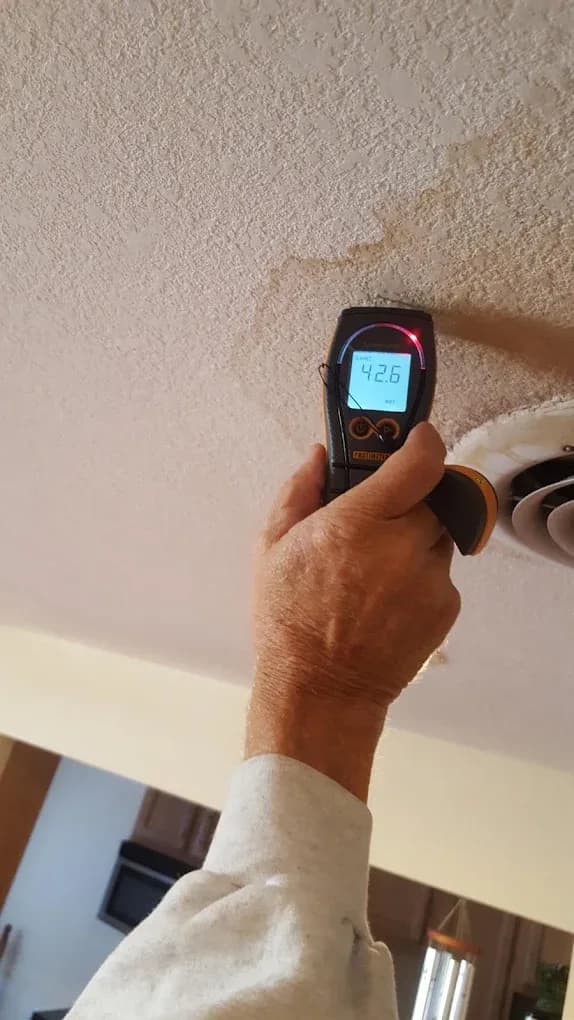 Moisture readings
A moisture meter held against a water-stained ceiling, reading 42.6  Tear-out
Three crew members in dust masks pulling wet insulation, drywall and wiring out of a basement room  Our equipment
Air movers and dehumidifiers racked and strapped inside a work van  Mold removal
A technician in a protective suit and respirator vacuuming a concrete block wall under ductwork 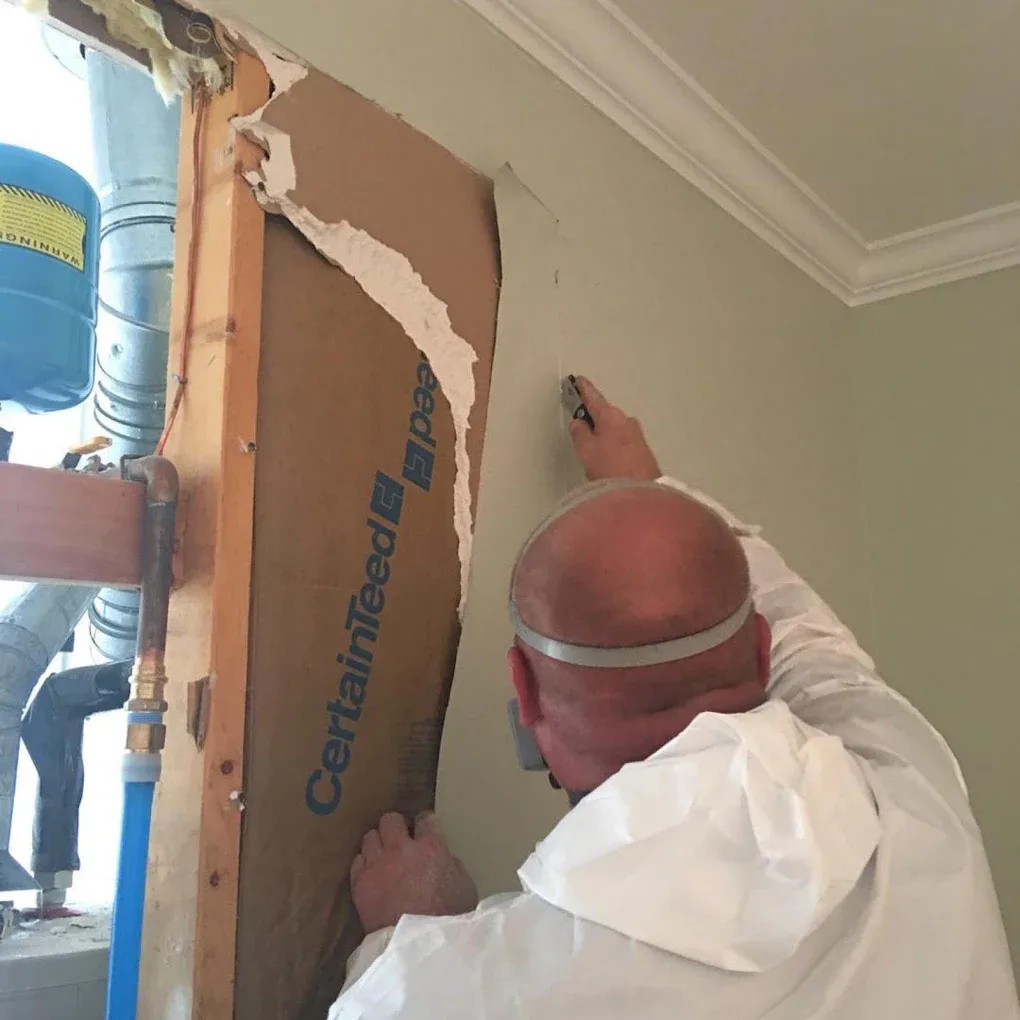 Tear-out
A technician in a protective suit cutting away drywall next to exposed pipes and a pressure tank
Near you
Mold inspection near you
- Water damage restoration in Fairfax
- Water damage restoration in Leesburg
- Water damage restoration in Sterling
- Water damage restoration in Ashburn
Services
Other services
- Water damage restorationLeaks, overflows and flooding cleaned up and dried out.Learn more
- Burst and frozen pipesWater from a split or frozen pipe, from shutoff to rebuild.Learn more
- Flooded basementsPump-out, drying and rebuilding finished basements.Learn more
- Sewage backup cleanupSafe removal and sanitizing after a sewer or toilet backup.Learn more
- Water extraction and dryingStanding water out, then drying until readings say dry.Learn more
- Rebuild and repairDrywall, floors, trim and paint, done by the same crew.Learn more
- Mold remediationMold removed and the wet area dried out.Learn more
Available 24/7
Smell something musty? Call now.
The sooner the water comes out, the less has to be torn out. One crew dries it out and builds it back.