

Available 24/7Mold remediation in Northern Virginia
Mold Remediation in Northern Virginia
We remove the mold, dry out the moisture that fed it, and build it back.
- 4.9 on Google
- One crew, dry-out to rebuild
- Available 24/7Nights, weekends, holidays
- 42-year builderOwner Curtis Berg, journeyman
- Navy Seabees veteranThe Navy's construction force
- Adjuster-ready recordsPhotos, readings, estimate
Mold remediation, start to finish
We remove mold by containing the area, taking out the mold and the material it grew on, cleaning and drying what is left, and rebuilding. We also track down the moisture that caused it, because mold comes back wherever water stays.
Call (703) 783-7855. If you are not sure what you are looking at, start with mold inspection and testing.
What not to do
- Do not scrub, sand or tear out moldy drywall yourself. It sends spores into the air and into your HVAC.
- Do not run fans across a moldy area. It moves spores to clean rooms.
- Do not paint over mold. It grows back through the paint.
- Do not count on bleach for drywall or wood. It does not reach mold that has grown into the material.
Where mold grows in Northern Virginia homes
Mold needs moisture, something to eat like drywall paper or wood, and time. Humid summers and older homes with below-grade lower levels give it plenty of chances here.
- After water damage that was not fully dried. A leak that was mopped up but never measured can leave a wall cavity or subfloor wet for weeks.
- Basements. Damp foundation walls, past flooding and high humidity behind finished walls.
- Bathrooms. Weak exhaust fans, slow shower pan leaks and failed caulk.
- Attics. Roof leaks, poor ventilation and bath fans that vent into the attic instead of outside.
- Around HVAC and water heaters. Condensate leaks and sweating ducts.
- Under sinks and behind appliances. Slow drips from supply lines and drain fittings.
How we remediate mold
1. Find the moisture and the mold
We look for the source of the moisture first. A wall can be cleaned perfectly and still grow mold again if the leak behind it is still there. We take moisture readings, look at the affected areas, and decide what has to come out.
2. Contain the area
We seal off the work area so spores stay where the work is and the rest of the house stays usable.
3. Remove what mold grew into
Moldy drywall, insulation, carpet and other porous materials are bagged and removed. Framing and other solid wood that can be saved is cleaned.
4. Clean and dry
We clean the remaining surfaces and dry the structure until moisture readings say dry. Closing up a wall that is still wet is how mold comes back.
5. Check the work
Before we rebuild, we check that the area is clean and dry.
6. Rebuild
Then the same crew rebuilds the room: insulation, drywall, trim, flooring and paint. Owner Curtis Berg is a Navy Seabees veteran with 42 years as a journeyman builder, so the room goes back together right.
Selling a home with a mold finding?
If a buyer's inspection turned up mold, you need it handled and documented before closing. We can assess it, remove it, and give you a written record of what was done. Read: Mold disclosure when selling a home in Virginia
Mold can affect health, especially for people with asthma, allergies or weak immune systems. If you have symptoms you think are related to mold, talk to your doctor.
Insurance documentation
We work for you, not your insurance company
You hire us and we bill you. Then we give your insurer the paperwork they ask for, so you are not chasing photos and receipts while your house is torn open.
Your insurance company decides what your policy covers. We are a restoration contractor, not a public adjuster.
What your adjuster gets
Sent to your insurer, in writing
- Photos of the damage before, during and after
- Moisture readings logged on every visit
- A written estimate for the dry-out and the rebuild
- Documentation sent to your insurer
- We meet your adjuster at your home
FAQ
Mold remediation questions
Not answered here? Call (703) 783-7855, any time.
What is mold remediation?
Mold remediation is containing the moldy area, removing the mold and the material it grew on, cleaning what can be saved, and drying out the moisture that let it grow. If the moisture stays, mold tends to come back.
Can I remove mold myself with bleach?
For a small spot on a hard surface, like tile grout, household cleaning is often fine. Bleach does not fix mold that has grown into drywall, wood or insulation, and scrubbing or sanding it can spread spores through the house. Larger areas and anything inside a wall should be handled with containment.
How do I know if I have mold behind a wall?
Common signs are a musty smell that does not go away, staining or bubbling paint, warped baseboards, and a past leak that was never properly dried. Mold inspection and testing can tell you what is there and how far it goes.
Do I have to leave my home during mold remediation?
Usually not for a contained job in one area. We seal off the work area so the rest of the house stays usable. People with asthma, allergies or weak immune systems may want to stay away from the work area while it is open, and should ask their doctor.
Does homeowners insurance cover mold remediation?
Sometimes, often when the mold came from a covered water loss like a burst pipe. Many policies limit or leave out mold from long-term leaks or humidity. We document the source and the damage and send it to your insurer, and your insurer decides.
Will you rebuild after mold removal?
Yes. Once the area is clean and dry, the same crew rebuilds it in-house: insulation, drywall, trim, flooring and paint.
Our work
Real jobs, start to finish
Photos from our own jobs: finding the water, opening up what got wet, and drying it out.
 Mold removal
A technician in a protective suit and respirator vacuuming a concrete block wall under ductwork  Mold removal
A technician in a protective suit and gloves removing baseboard below a window - Moisture readings
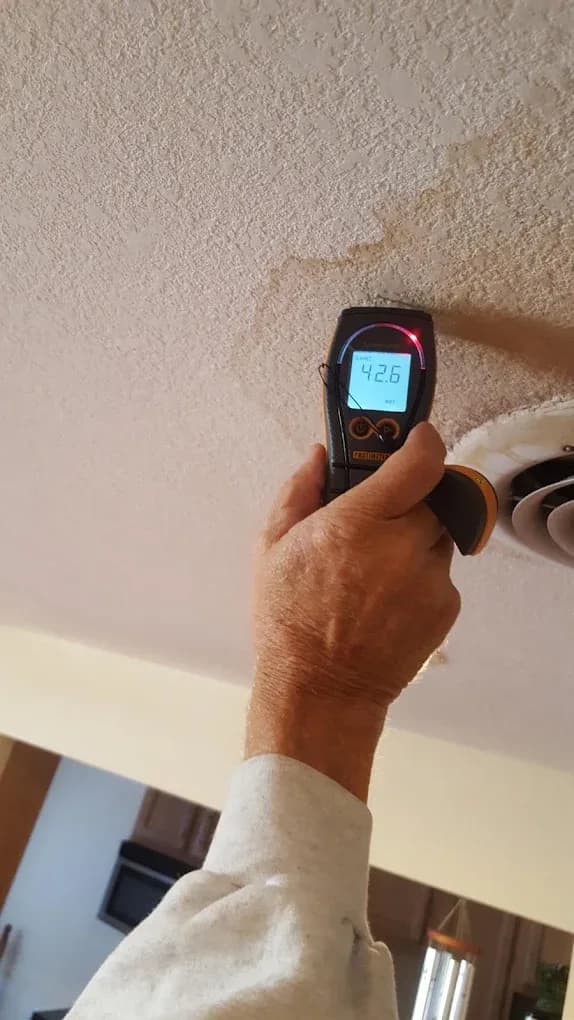
A moisture meter held against a water-stained ceiling, reading 42.6  Tear-out
Three crew members in dust masks pulling wet insulation, drywall and wiring out of a basement room  Our equipment
Air movers and dehumidifiers racked and strapped inside a work van 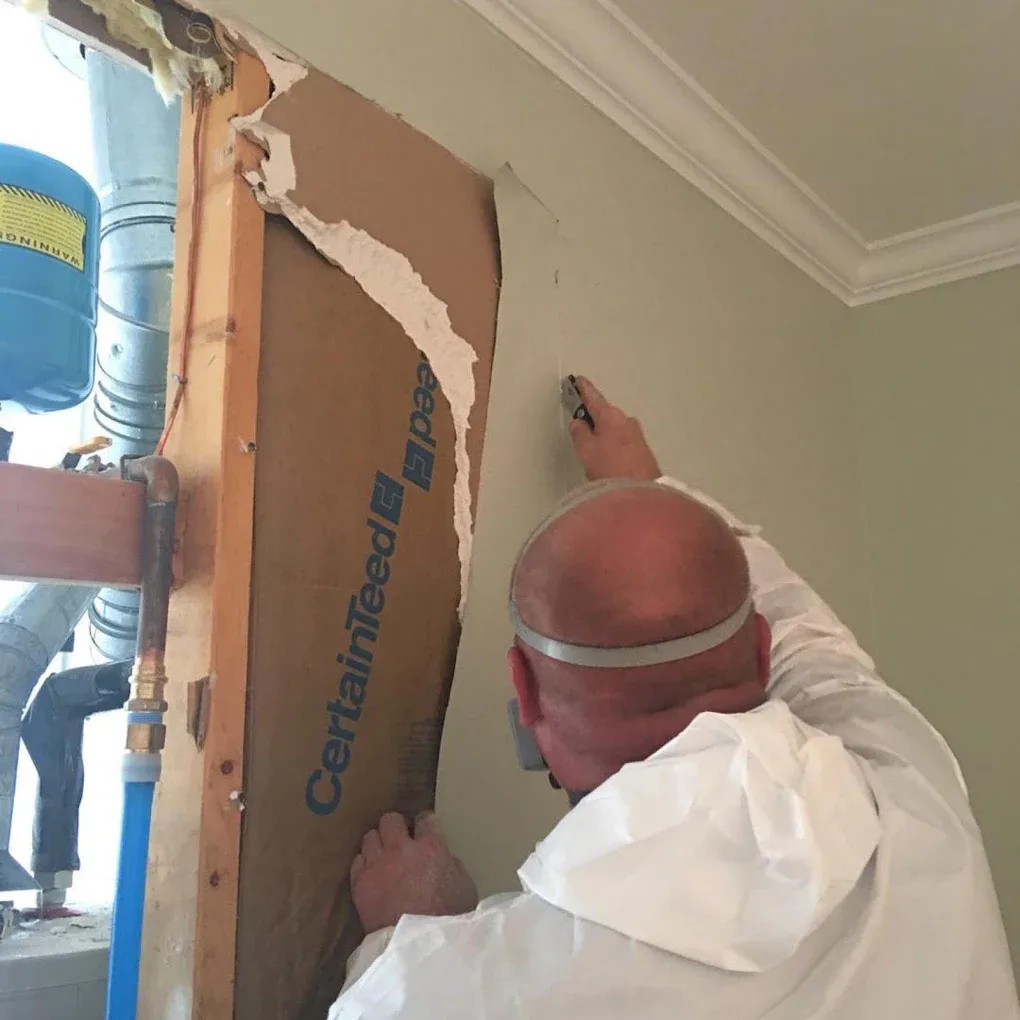 Tear-out
A technician in a protective suit cutting away drywall next to exposed pipes and a pressure tank
Near you
Mold remediation near you
- Water damage restoration in Fairfax
- Water damage restoration in Leesburg
- Water damage restoration in Sterling
- Water damage restoration in Ashburn
Services
Other services
- Water damage restorationLeaks, overflows and flooding cleaned up and dried out.Learn more
- Burst and frozen pipesWater from a split or frozen pipe, from shutoff to rebuild.Learn more
- Flooded basementsPump-out, drying and rebuilding finished basements.Learn more
- Sewage backup cleanupSafe removal and sanitizing after a sewer or toilet backup.Learn more
- Water extraction and dryingStanding water out, then drying until readings say dry.Learn more
- Rebuild and repairDrywall, floors, trim and paint, done by the same crew.Learn more
- Mold inspection and testingFind out if you have mold and how far it goes.Learn more
Available 24/7
Found mold? Call now.
The sooner the water comes out, the less has to be torn out. One crew dries it out and builds it back.