

Available 24/7Sewage backup cleanup
Sewage Backup Cleanup in Northern Virginia
Safe cleanup first, then we build it back.
- 4.9 on Google
- One crew, dry-out to rebuild
- Available 24/7Nights, weekends, holidays
- 42-year builderOwner Curtis Berg, journeyman
- Navy Seabees veteranThe Navy's construction force
- Adjuster-ready recordsPhotos, readings, estimate
Sewage backup: safety first
We clean up sewage backups by removing contaminated material, cleaning and sanitizing what can be saved, drying the structure, and rebuilding. Until we get there, keep everyone away from the water and stop using sinks, toilets and showers.
Call (703) 783-7855 any time. Sewage is not a wait-until-morning problem.
Do this now
- Keep people and pets out. Especially children, older adults, pregnant women and anyone who is sick.
- Stop using water. No flushing, showers, laundry or dishwasher until the line is cleared.
- Stay away from electricity. If sewage is near outlets, cords or the electrical panel, do not go in.
- Do not use a household vacuum or fans. They spread contaminated water and droplets through the house.
- Take photos from a safe spot, including the drain or fixture where the water came up.
- If you touch it, wash with soap and clean water right away, and keep any cuts covered.
Why sewage backs up into a house
Sewage comes up at the lowest drain in the house, usually a basement floor drain, a basement toilet or a tub. The cause is somewhere between your fixtures and the public sewer.
- A clog in your main line. Grease, wipes, paper towels and tree roots build up until water has nowhere to go.
- Tree roots or a broken pipe. Older clay and cast iron lines crack or separate, and roots grow into the gaps.
- A backup in the public sewer. When the main sewer is overloaded or blocked, water can push back up into homes connected to it.
- Heavy storms. In some systems, a long rain overloads the lines and pushes water back toward houses.
Clearing the line is plumbing work. Cleaning up what came out of it is our work. If you are not sure where the blockage is, call a plumber first so the backup stops, then call us.
What sewage cleanup involves
Contain the area
We work in protective gear and keep the affected area separated from the rest of the house so contaminated water and dust do not travel.
Remove the sewage and what it soaked
We extract the standing water and remove porous material that sewage touched: carpet and pad, drywall below the wet line, insulation, and anything else that cannot be cleaned. Every piece is photographed before it leaves.
Clean and sanitize
Hard surfaces such as concrete, tile, framing and sealed wood are cleaned and treated with a disinfectant. The goal is a space that is safe to dry and rebuild, not a surface that only looks clean.
Dry the structure
Once the area is clean, we dry the framing and slab with dehumidifiers and air movers and take moisture readings until they say dry. Wet framing left behind a new wall can grow mold.
Document it and rebuild
We write the estimate, send the photos, readings and estimate to your insurer, and meet your adjuster at your home. Then the same crew rebuilds the room. Most sewage backups happen in basements, so this often looks like a flooded basement job with extra cleaning steps.
The company is owned by Curtis Berg, a Navy Seabees veteran with 42 years as a journeyman builder. You get one crew from cleanup to the finished room, and we work for you, not your insurance company.
Our process
How we clean up a sewage backup
Four steps, one crew, one phone number.
- Step 1
Stop the water and pull it out
We find where the water is coming from, stop it, and extract standing water from floors, carpet and the structure.
- Step 2
Dry it out
We set dehumidifiers and air movers and take moisture readings each visit. The equipment stays until the readings say dry.
- Step 3
Document it for your adjuster
We photograph the damage, log every moisture reading, and write the estimate. We send that documentation to your insurer and meet your adjuster on site.
- Step 4
Build it back
The same crew replaces drywall, insulation, flooring, trim and paint. No handoff to a second contractor.
Insurance documentation
We work for you, not your insurance company
You hire us and we bill you. Then we give your insurer the paperwork they ask for, so you are not chasing photos and receipts while your house is torn open.
Your insurance company decides what your policy covers. We are a restoration contractor, not a public adjuster.
What your adjuster gets
Sent to your insurer, in writing
- Photos of the damage before, during and after
- Moisture readings logged on every visit
- A written estimate for the dry-out and the rebuild
- Documentation sent to your insurer
- We meet your adjuster at your home
FAQ
Sewage backup questions
Not answered here? Call (703) 783-7855, any time.
Is sewage backup dangerous?
Yes. Sewage carries bacteria, viruses and parasites that can make people sick through skin contact, splashes or breathing in dried particles. Keep children, pets and anyone with a weak immune system away from the area.
Can I clean up a sewage backup myself?
A small toilet overflow that stays on tile can be cleaned with gloves, eye protection and a disinfectant. Anything that reaches carpet, drywall, wood or a finished basement should be handled by a restoration crew, because sewage soaks into porous material and cannot be cleaned out of it.
What has to be thrown out after a sewage backup?
Porous material that sewage touched usually has to go, including carpet and pad, drywall below the wet line, insulation, upholstered furniture and cardboard. Hard surfaces like tile, concrete and sealed wood can often be cleaned and sanitized.
Should I keep using my sinks and toilets?
No. Stop using water in the house until the blockage is cleared. Every flush or shower can push more sewage out of the lowest drain in the house.
Does homeowners insurance cover sewage backup?
Sometimes. Many standard policies leave out sewer and drain backup unless you added that coverage, so check your policy. We document the source and the damage, send it to your insurer, and meet your adjuster on site. Your insurer decides what is covered.
Do you rebuild after a sewage cleanup?
Yes. Once the area is clean, sanitized and dry, the same crew rebuilds it in-house, from drywall and insulation to flooring, trim and paint.
Our work
Real jobs, start to finish
Photos from our own jobs: finding the water, opening up what got wet, and drying it out.
 Tear-out
A technician in a full protective suit cutting with a grinder in an unfinished basement stairwell - Moisture readings
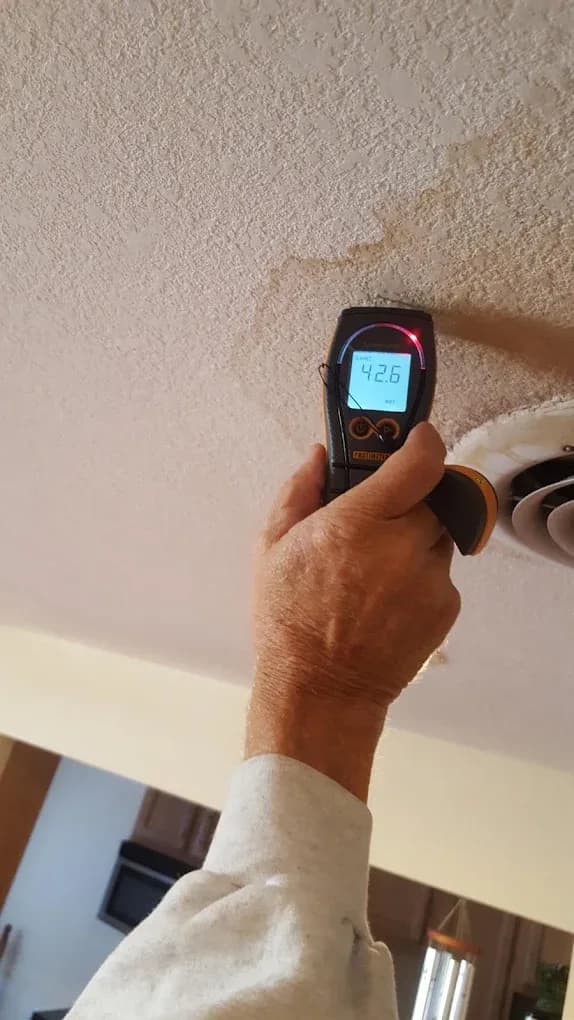
A moisture meter held against a water-stained ceiling, reading 42.6  Tear-out
Three crew members in dust masks pulling wet insulation, drywall and wiring out of a basement room  Our equipment
Air movers and dehumidifiers racked and strapped inside a work van  Mold removal
A technician in a protective suit and respirator vacuuming a concrete block wall under ductwork 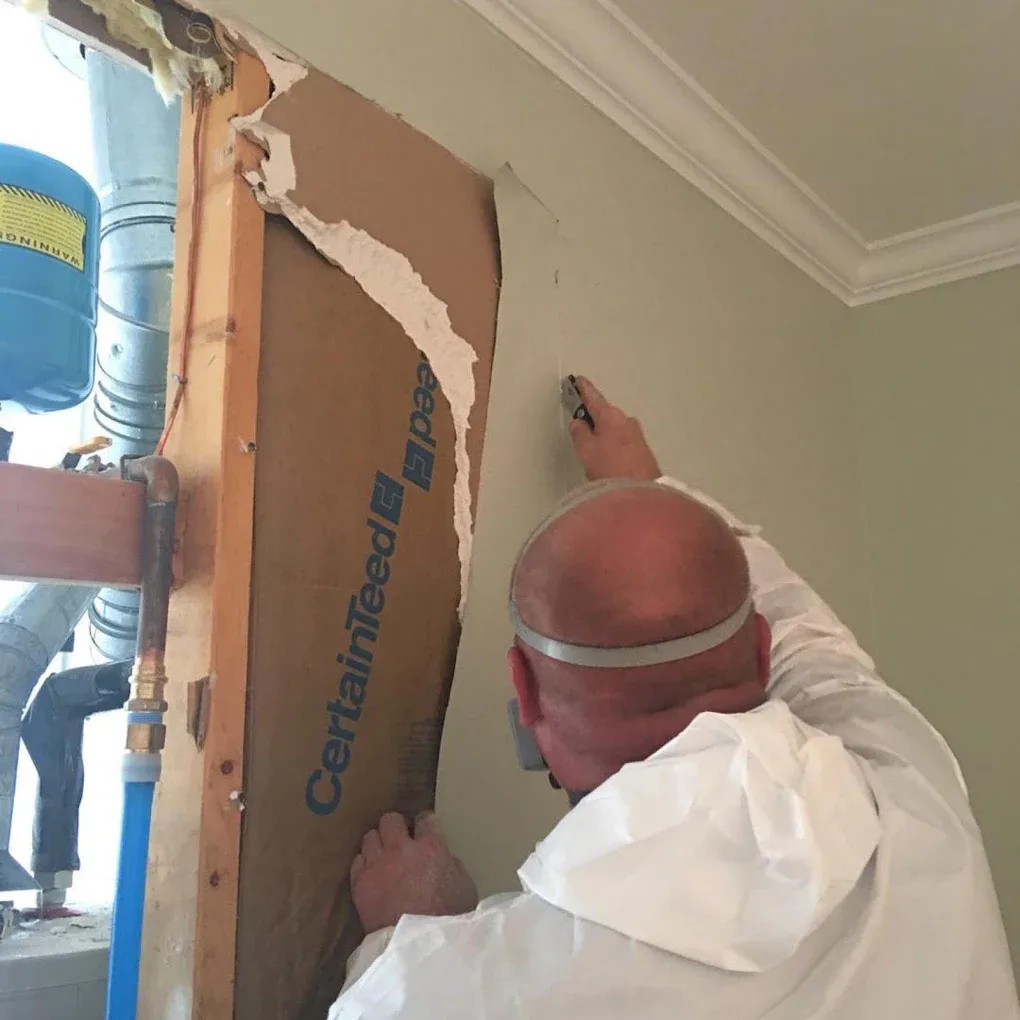 Tear-out
A technician in a protective suit cutting away drywall next to exposed pipes and a pressure tank
Near you
Sewage cleanup near you
- Water damage restoration in Fairfax
- Water damage restoration in Leesburg
- Water damage restoration in Sterling
- Water damage restoration in Ashburn
Services
Other services
- Water damage restorationLeaks, overflows and flooding cleaned up and dried out.Learn more
- Burst and frozen pipesWater from a split or frozen pipe, from shutoff to rebuild.Learn more
- Flooded basementsPump-out, drying and rebuilding finished basements.Learn more
- Water extraction and dryingStanding water out, then drying until readings say dry.Learn more
- Rebuild and repairDrywall, floors, trim and paint, done by the same crew.Learn more
- Mold remediationMold removed and the wet area dried out.Learn more
- Mold inspection and testingFind out if you have mold and how far it goes.Learn more
Available 24/7
Sewage in the house? Call now.
The sooner the water comes out, the less has to be torn out. One crew dries it out and builds it back.