

Available 24/7Water damage restoration in Northern Virginia
Water Damage Restoration in Northern Virginia
Water damage fixed start to finish by one local crew.
- 4.9 on Google
- One crew, dry-out to rebuild
- Available 24/7Nights, weekends, holidays
- 42-year builderOwner Curtis Berg, journeyman
- Navy Seabees veteranThe Navy's construction force
- Adjuster-ready recordsPhotos, readings, estimate
What water damage restoration means here
Water damage restoration is the work of getting water out of your home, drying the structure, and putting the damaged rooms back the way they were. We do every step with one crew, from the first call to the finished room, so you never wait on a second contractor.
Call (703) 783-7855 any time, day or night. The sooner the water comes out, the less has to be torn out.
What to do before we get there
- Stop the water. Close the main water valve, or the valve on the fixture that is leaking.
- Stay clear of electricity. Keep out of rooms where water is near outlets, cords or the electrical panel, and out from under any ceiling that sags.
- Take photos and video. Get the source of the leak and every wet room before anything moves. Your insurer will want to see it as you found it.
- Lift what you can. Move rugs, electronics, papers and furniture off wet floors. Put foil or wood blocks under furniture legs you cannot move.
- Leave wet drywall and carpet in place. Pulling it out by hand before it is documented makes the damage harder to prove. We remove what has to go and photograph it first.
Where water damage starts in Northern Virginia homes
Most household water damage traces back to a short list of sources. Knowing which one you have tells us what kind of water we are dealing with and how far it likely traveled.
- Supply lines and fixtures. Braided lines to toilets and sinks, washing machine hoses, dishwasher and refrigerator ice maker lines. These fail under pressure and keep running until someone shuts the water off.
- Water heaters. A leaking tank or a failed relief valve on the lowest floor puts water straight onto a finished basement or family room.
- Frozen and burst pipes. Pipes in exterior walls, crawlspaces and over garages split in a hard freeze and leak when they thaw.
- Heavy rain and groundwater. Window wells, foundation cracks and failed sump pumps lead to flooded basements.
- AC and attic leaks. A clogged condensate line or a pan overflowing in the attic can soak a ceiling from above.
- Sewer and toilet backups. These are a different job with different safety rules. See sewage backup cleanup.
Clean water, gray water and black water
Not all water is the same. Water from a supply line starts out clean. Water from a dishwasher, washing machine or a toilet bowl without waste is gray water and can make people sick. Sewage and floodwater from outside are black water, and anything porous they touch usually has to come out. Clean water also turns worse the longer it sits, which is one more reason to start fast.
What to expect, day by day
The first visit
We find the source and confirm it is stopped. Then we extract the standing water, take moisture readings to map how far the water went, and remove what cannot be dried, like soaked carpet pad or drywall that wicked water up from the floor. Before anything goes in the dumpster, we photograph it. Then we set dehumidifiers and air movers.
The drying days
Drying takes as long as the materials take. Drywall and framing in a room with good air flow dry faster than a hardwood floor, a subfloor under tile, or a concrete slab. We come back to take readings and move equipment as areas dry. The equipment stays until the readings say dry, not until a set number of days passes.
Documentation for your adjuster
Every visit adds to the file: photos, moisture readings and notes on what was removed and why. We write the estimate for both the dry-out and the rebuild, send the documentation to your insurer, and meet your adjuster at your home. Your insurance company decides what your policy covers. Read: Does homeowners insurance cover burst pipes?
The rebuild
When the house is dry, the same crew builds it back: insulation, drywall, tape and finish, trim, flooring and paint. If water sat long enough to grow mold, we handle mold remediation before the walls close up.
Why one crew matters
Many restoration companies stop at drying. You get a dry, gutted room and a list of contractors to call. Then you wait for new estimates and a new schedule while a stranger tries to figure out what was there before.
We skip that handoff. The company is owned by Curtis Berg, a Navy Seabees veteran with 42 years as a journeyman builder. Because a builder plans the dry-out, we cut out what needs to go and save what can be saved, knowing exactly how it goes back together. You deal with one company, one estimate and one phone number the whole way through. And we work for you, not your insurance company.
Our process
How water damage restoration works with us
Four steps, one crew, one phone number.
- Step 1
Stop the water and pull it out
We find where the water is coming from, stop it, and extract standing water from floors, carpet and the structure.
- Step 2
Dry it out
We set dehumidifiers and air movers and take moisture readings each visit. The equipment stays until the readings say dry.
- Step 3
Document it for your adjuster
We photograph the damage, log every moisture reading, and write the estimate. We send that documentation to your insurer and meet your adjuster on site.
- Step 4
Build it back
The same crew replaces drywall, insulation, flooring, trim and paint. No handoff to a second contractor.
Insurance documentation
We work for you, not your insurance company
You hire us and we bill you. Then we give your insurer the paperwork they ask for, so you are not chasing photos and receipts while your house is torn open.
Your insurance company decides what your policy covers. We are a restoration contractor, not a public adjuster.
What your adjuster gets
Sent to your insurer, in writing
- Photos of the damage before, during and after
- Moisture readings logged on every visit
- A written estimate for the dry-out and the rebuild
- Documentation sent to your insurer
- We meet your adjuster at your home
FAQ
Water damage questions
Not answered here? Call (703) 783-7855, any time.
What does water damage restoration include?
It includes stopping the water, extracting it, drying the structure with dehumidifiers and air movers, documenting the damage, and rebuilding what had to be removed. We do all of it with one crew.
How long does it take to dry out a house after water damage?
It depends on how much water there was, how long it sat and what it soaked into. Drywall and carpet pad dry faster than hardwood, subfloor or a concrete slab. We take moisture readings on every visit and pull the equipment only when the readings say dry.
Can I stay in my home during water damage restoration?
Often, yes. If the damage is limited to a few rooms and the water was clean, many families stay home while equipment runs. If the water came from sewage, or the kitchen or only bathroom is torn out, staying somewhere else for part of the job may be easier.
Do I need to call my insurance company before I call you?
No. Stop the water and call us first so drying can start. You can report the loss to your insurer the same day, and we send them the photos, moisture readings and estimate they ask for.
Will you rebuild after drying, or do I need another contractor?
We rebuild. Rebuild and repair is done in-house by the same crew that dried your home, from drywall and insulation to flooring, trim and paint.
Why can't I just dry it with fans?
Household fans move air across the surface but do not pull water out of wall cavities, subfloor or insulation. Water left inside the structure can warp floors and grow mold weeks later, which is why we measure moisture instead of guessing.
Our work
Real jobs, start to finish
Photos from our own jobs: finding the water, opening up what got wet, and drying it out.
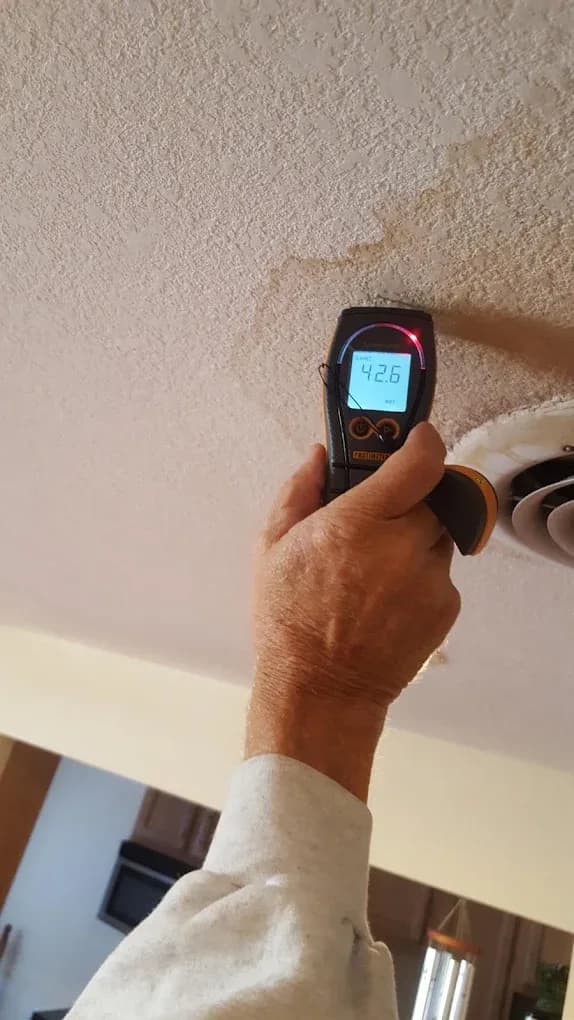
- Moisture readings
A moisture meter held against a water-stained ceiling, reading 42.6  Tear-out
Three crew members in dust masks pulling wet insulation, drywall and wiring out of a basement room  Our equipment
Air movers and dehumidifiers racked and strapped inside a work van  Mold removal
A technician in a protective suit and respirator vacuuming a concrete block wall under ductwork 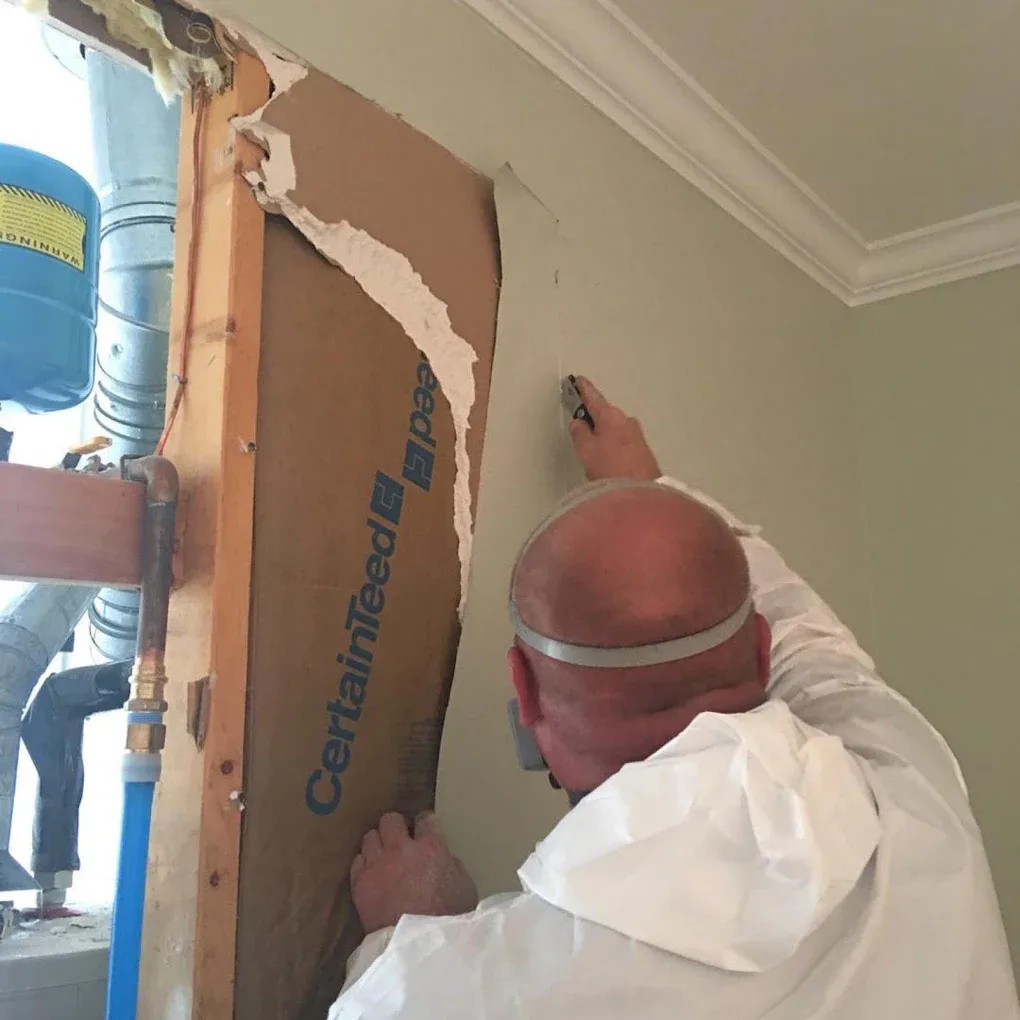 Tear-out
A technician in a protective suit cutting away drywall next to exposed pipes and a pressure tank  Inspection
A technician with a flashlight checking an opened section of ceiling above a doorway
Near you
Water damage restoration near you
- Water damage restoration in Fairfax
- Water damage restoration in Leesburg
- Water damage restoration in Sterling
- Water damage restoration in Ashburn
Services
Other services
- Burst and frozen pipesWater from a split or frozen pipe, from shutoff to rebuild.Learn more
- Flooded basementsPump-out, drying and rebuilding finished basements.Learn more
- Sewage backup cleanupSafe removal and sanitizing after a sewer or toilet backup.Learn more
- Water extraction and dryingStanding water out, then drying until readings say dry.Learn more
- Rebuild and repairDrywall, floors, trim and paint, done by the same crew.Learn more
- Mold remediationMold removed and the wet area dried out.Learn more
- Mold inspection and testingFind out if you have mold and how far it goes.Learn more
Available 24/7
Water where it should not be? Call now.
The sooner the water comes out, the less has to be torn out. One crew dries it out and builds it back.